
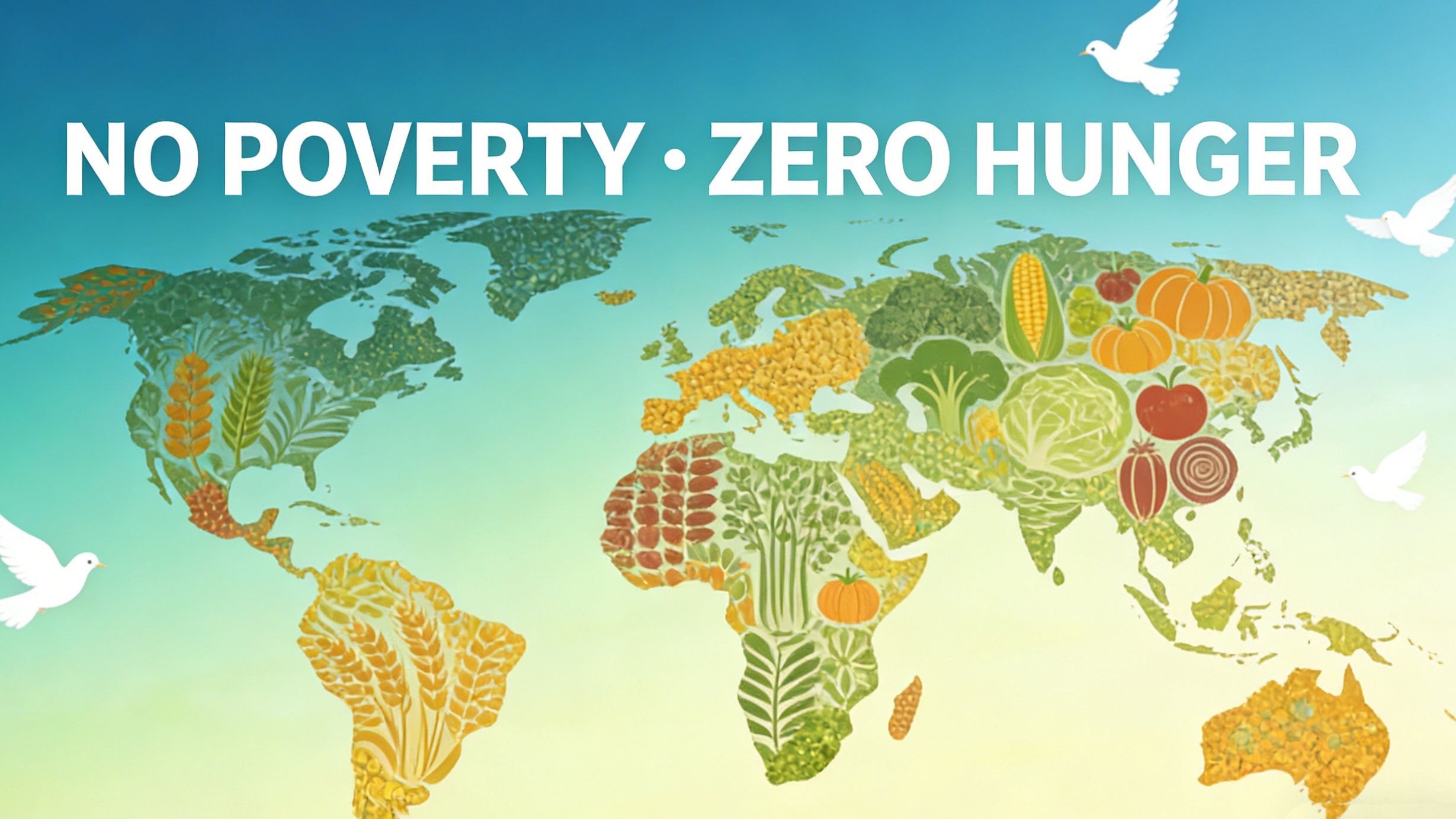
As parents, we all want the best for our children — a safe home, healthy food, loving relationships, and the chance to grow into caring, confident people. What many parents don’t realize is that the everyday choices we make at home can also help build a fairer, healthier world.
This website helps young parents connect their daily family routines to two important global goals:
SDG 1: No Poverty — building fairness, empathy, and security
SDG 2: Zero Hunger — nurturing healthy, mindful, sustainable food habits

These goals are not just about governments and big organisations. They are about the values we teach, the habits we model, and the community connections we strengthen. Sustainable parenting is simply a way of raising children who understand care, for themselves, for others, and for the planet.
“Every small act of care at home plants the seeds of a sustainable future.”
Explore practical ideas, simple activities, and everyday ways you can raise children with compassion, awareness, and responsibility for our shared world.
Section 1: Why It Matters
Raising Children in a Changing World
From rising living costs to climate change and food insecurity, the world our children will grow up in is full of challenges. Sustainable parenting helps them develop the skills and values they need to thrive which are empathy, critical thinking, gratitude, and responsibility.
SDG 1: No Poverty — What It Means for Families
Poverty affects a child’s education, health, safety, and future opportunities. Teaching fairness and empathy at home helps children understand that wellbeing is shared, that is everyone deserves security and dignity.
Global Snapshot (2024–2025)
- 1 in 10 people live in extreme poverty
- 8.9% of the world may still be in extreme poverty by 2030
- ¾ of the world’s poorest live in Sub-Saharan Africa or conflict-affected regions
- Only 1 in 5 countries is on track to reduce poverty by half
Revised Global Estimates
- New World Bank data shows 1.5 billion people experienced poverty 1990–2022
- 2025 projection: 880 million people in extreme poverty
- Vulnerability is rising due to conflict, climate shocks, inflation, and slow recovery after COVID-19
SDG 2: Zero Hunger — What It Means for Families
Hunger is connected to food waste, unhealthy diets, and fragile food systems. Helping children understand where food comes from builds respect for those who grow it and for the Earth that sustains us.
Global Hunger Overview
- 8.2% of people are undernourished (2024)
- 2.3 billion people (28%) experience moderate or severe food insecurity
- Hunger worsened in: Northern Africa, Western Asia & Sub-Saharan Africa
Food Prices
- 2023 food prices = 3× pre-pandemic levels
Drivers: Climate shocks; Conflict; High shipping & fuel costs; Stockpiling & trade restrictions


Section 2: Sustainable Parenting at Home
Teach Empathy and Fairness (SDG 1)
- Talk about sharing and fairness during play.
- Explain that not all families have the same resources.
- Let children help choose toys or clothes to donate.
- Celebrate kindness and cooperation, not just achievement.
Build Healthy Food Habits (SDG 2)
- Cook together and talk about ingredients.
- Grow a small herb or vegetable plant.
- Reduce food waste by planning meals together.
- Show children how leftovers can become new meals.
Everyday Sustainable Actions
- Swap or share baby items with other parents.
- Buy fewer but higher-quality toys and clothes.
- Reuse and repair items to model resourcefulness.
- Involve kids in simple recycling or composting.
Section 3: In the Community
Raising Children Through Connection
Sustainable development is not an individual journey, but community-based. Parents can help children build a sense of belonging and care for others.
Ways to engage:
- Join local food co-ops, community gardens, or swap markets.
- Participate in school sustainability projects.
- Support local farmers’ markets when possible.
- Practise mutual aid — exchanging help with other families.
This teaches children that caring for the world begins with caring for the people around us.
Section 4: Sample Parent-to-Child Conversations
About Poverty
“Some families don’t always have enough food or toys. That’s why we share and help others, everyone deserves what they need.”
About Hunger
“Food is precious because farmers, land, water, and many people help make it. That’s why we try not to waste it.”
About Fairness
“Being fair doesn’t always mean everyone gets the same. It means everyone gets what they need.”
About Gratitude
“We are lucky to have this food. Let’s say thank you to everyone who helped grow it.”
“Sustainability grows from the home outward.
By raising children with empathy, curiosity, and responsibility,
we help build a world where everyone can thrive.”